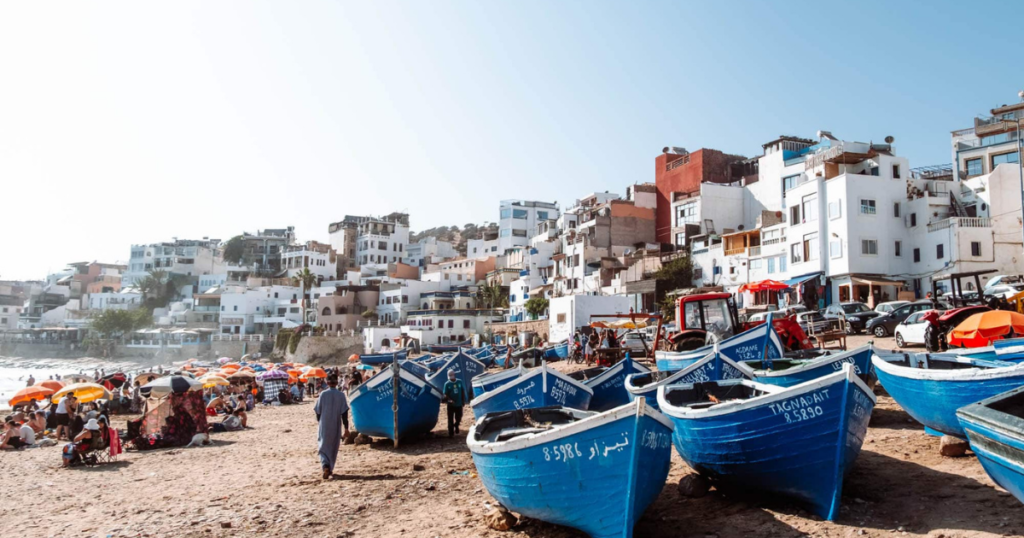
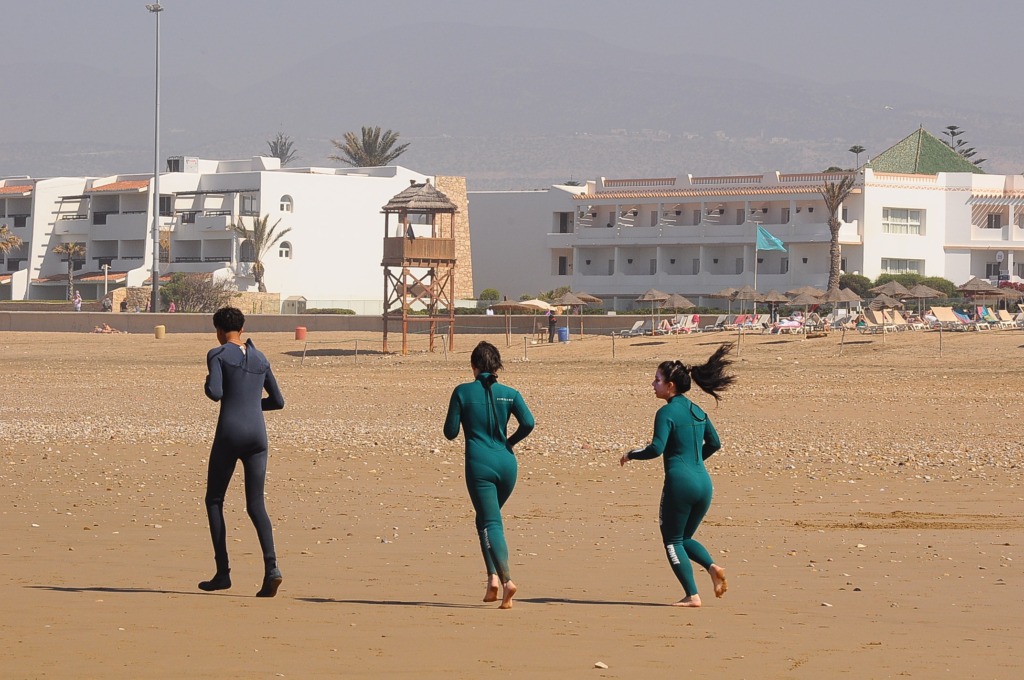
While Europe pulls on its winter coat, a 3-hour flight south drops you into 22°C air, offshore mornings and a right-hand point that peels for longer than your legs can hold. That is the short version of why a surf camp Morocco has become the default winter trip for surfers from Lisbon to Lviv.
The long version is worth reading, because not every stretch of this coast surfs the same way. Thirty minutes separates a mellow beginner beach break from a solid point that demands respect. Choosing the right village matters more than choosing the right board.
Here is how the coast north of Agadir actually works.
Why Morocco earns its reputation
The Moroccan Atlantic sits directly in the path of North Atlantic swell. From September through April, low-pressure systems spinning off Iceland send long-period lines down the coast, where they wrap around a series of rocky headlands and organise themselves into some of the longest right-hand point breaks on the planet.
Three things make it work for a surf camp specifically:
- Consistency. Winter is the season here. When European beach breaks are closing out in onshore chaos, this coast is often clean and offshore in the morning.
- Variety within 40 minutes. Beginner beach breaks, forgiving points, and heavy reef are all within a short drive of each other. A camp can move you to the right wave each day instead of forcing one spot on everyone.
- Warmth. Water sits around 17–19°C in winter and 20–22°C in summer. A 3/2 wetsuit covers the cold months; a shorty is plenty by late spring.
Add roughly 300 days of sun a year, a currency that stretches, and no jet lag from Europe, and the maths gets obvious.
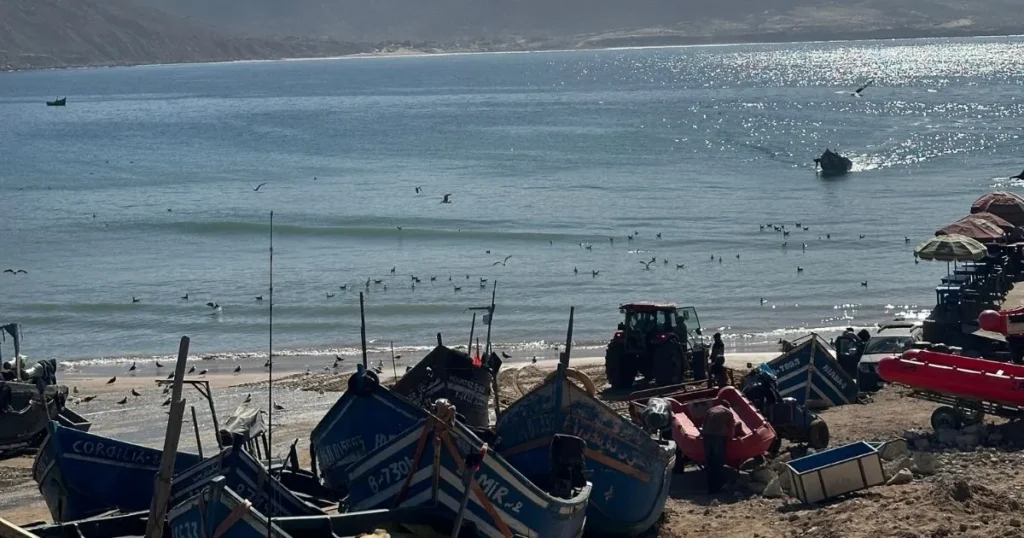
The three villages: Tamraght, Taghazout and Imsouane
Tamraght — the quiet one
Fifteen minutes from Agadir Al Massira Airport, Tamraght is the calmer neighbour. Banana Beach is a wide, sandy-bottomed stretch that stays workable when other spots get messy, which makes it the best first-week wave on the coast. Just up the road, Devil’s Rock (Crocro) offers a right-hander that gives intermediates a real point-break experience without the crowd pressure.
Stay here if you want early nights, argan-lined valleys behind the village, and a walk to the water instead of a queue for it.
Taghazout — the heartbeat
Taghazout is the name on the map, and for good reason. Within a few kilometres you have:
- Anchor Point — the famous one. On a solid winter swell it links section after section for several hundred metres. Advanced surfers only when it’s overhead.
- Panoramas and Hash Point — friendlier rights that break close to the village, ideal for intermediates finding their feet on a point.
- La Source, Mysteries and Killer Point — the next tier up, with more power and more consequence.
The village itself is blue-and-white, tightly packed, and permanently smells of mint tea and neoprene. It is the social centre of the coast.
Imsouane — the long ride
An hour and a quarter north, Imsouane’s bay produces one of the longest rides in Africa. On the right swell, the wave spools slowly across the bay for hundreds of metres, forgiving enough for improving surfers and long enough that the paddle back is a genuine consideration. It is a longboarder’s daydream and the single best place on this coast to learn what a proper turn feels like on an open face.
A note of honesty: parts of Imsouane’s seafront were cleared in 2024 and the village has been rebuilding since. The waves and the harbour are untouched, camps and cafés are open, and going there supports the people rebuilding it.
When to go
| Season | What to expect | Best for |
|---|---|---|
| October–March | Peak swell. Biggest, most consistent surf. 3/2 wetsuit. | Intermediate and advanced surfers |
| April–June | Smaller, cleaner, warmer. Fewer crowds. | Improvers and first-timers |
| July–September | Smallest surf, hottest weather, occasional south swell. | Absolute beginners, families, non-surfing partners |
If you’re learning, the shoulder seasons are genuinely better than winter. Small waves teach faster than big ones.
What a week at SpearSurf looks like
[Adapt this section to your actual package structure — see notes at the end.]
A typical day starts with a check of the forecast over breakfast, because the plan follows the swell, not the timetable. From there:
- Morning session level-split groups, coaching in the water, at the spot that suits the day’s conditions.
- Lunch back at the house Moroccan cooking, long table, no rush.
- Afternoon a second session, video review, or yoga on the terrace. Your call.
- Evening sunset from the roof, dinner, and an early night before it starts again.
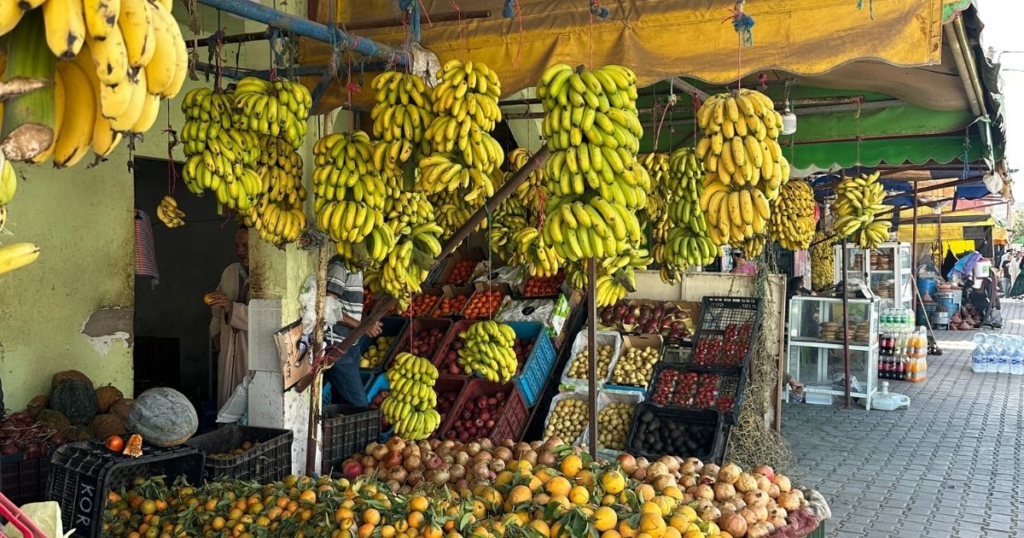
Beyond the surf, the week usually includes [airport transfers], [board and wetsuit hire], and [optional trips: Paradise Valley, the Saturday souk, hammam].
Who it’s for
Never surfed. You’ll spend the first days on a soft-top in whitewater at Banana Beach, and you’ll stand up. Most people are riding green waves by day four.
Improving. This is the coast that fixes intermediate plateaus. Long, predictable point waves give you time to think, which beach breaks never do.
Experienced. Come between November and February, bring your own board, and let a guide who reads this coast daily put you in the right place at the right tide.
The practical bit
- Fly to: Agadir Al Massira (AGA). Marrakech (RAK) also works, at roughly 3 hours by road.
- Transfers: Arrange in advance. The airport-to-Tamraght run is short but taxi pricing at arrivals is a negotiation you don’t want after a 4am flight.
- Entry requirements: Many nationalities enter Morocco visa-free for up to 90 days. Check your own country’s current rules before booking.
- Pack: 3/2 wetsuit for winter (or hire one), reef-safe sunscreen, a hat, and modest clothing for village streets and the souk.
- Money: Dirham is a closed currency. Withdraw on arrival; carry cash for small cafés and taxis.
Ready when you are
The swell arrives whether you book or not. The difference between watching it on a forecast app and standing in it comes down to one decision.
[Book Now] — pick your dates and secure your spot. [View Packages] — compare weeks, levels and accommodation first.