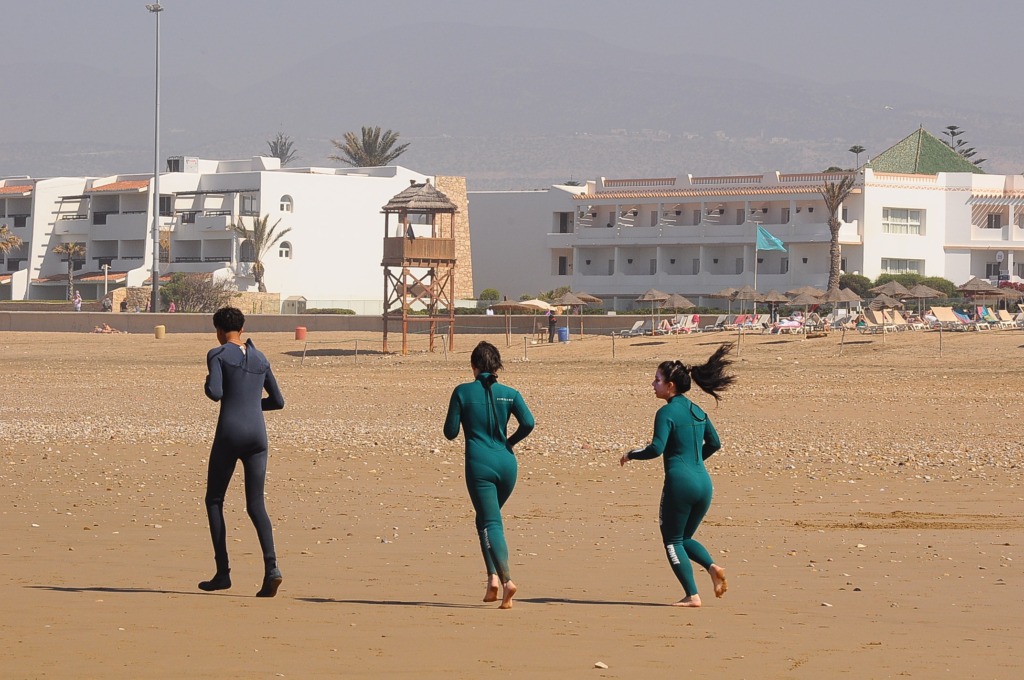
Short answer: April to May and September to October are the best time to visit Morocco. Warm days, manageable nights, no extreme heat, and reasonable crowds almost everywhere in the country.
But “all-round” is doing a lot of work in that sentence. Morocco stacks four climates into one country, and the best month for a Sahara trek is not the best month for a surf trip or a Marrakech city break. The right answer depends entirely on what you came for.
Here’s the breakdown.
What you need to know first
Three things shape every decision about when to go.
Morocco is not one climate. The Atlantic coast, the interior cities, the High Atlas and the Sahara behave completely differently in the same week. In April, Agadir is 24°C, Marrakech is 27°C, the desert is pleasant, and Toubkal is still under snow.
Altitude beats latitude. Marrakech and the Sahara are further south than Agadir, yet both get colder at night. Elevation and distance from the ocean matter more than how far south you are.
Peak season is set by European holidays, not by weather. Easter week, July and August, Christmas and New Year, and February half-term drive prices and crowds. The best-value weeks are usually the ones immediately before and after them.
Best months for good weather
If weather alone decides it, target April, May, September and October.
In those months you get daytime temperatures in the low-to-mid twenties across most of the country, comfortable evenings, very little rain outside the north, and every region open and accessible. The desert is neither freezing at night nor lethal at midday. The mountains are walkable. The coast is warm.
Months to approach with care:
- July and August inland. Marrakech regularly passes 40°C and the Sahara is genuinely dangerous. The coast is fine — the interior is not.
- December to February at altitude. Atlas passes close, and nights fall below freezing in the mountains and the desert.
- November to February in the north. Fes, Tangier and Chefchaouen collect most of Morocco’s annual rainfall in this window.
Best months for fewer crowds
The quietest weeks: mid-January through early February, late November, and the first two weeks of December.
The busiest: Easter week, all of July and August on the coast, the Christmas–New Year window in Marrakech and Agadir, and mid-February half-term.
The cheapest: mid-January to February, then November. Flights, riads and camps all drop, and in January you get the year’s best surf as a bonus.
One variable that moves each year: Ramadan shifts about eleven days earlier annually. Tourist areas operate normally, but daytime restaurant hours change in smaller towns and the pace of the day shifts. Fewer visitors travel during it, which makes it quiet and good value if you don’t mind adjusting. Check the dates for your travel year.
Best time to visit Morocco by season
Spring (March–May)
The strongest season overall. Marrakech settles at 22–28°C, the Atlas valleys turn green with snowmelt, wildflowers open across the middle of the country, and the desert is comfortable both day and night. Late April into May brings the rose harvest in the Dadès valley.
On the coast, swell is easing off its winter peak and the water is warming. It’s the point in the year when conditions are big enough to be interesting and small enough to be forgiving.
The only complication is Easter, which spikes prices and fills riads for a week.
Summer (June–August)
Split the country in two. Inland is out — Marrakech, Fes and the Sahara reach temperatures that make sightseeing miserable and desert trekking unsafe. The coast is the whole point.
Agadir sits at 25–28°C with reliable sun, and Essaouira stays cooler at 22–24°C thanks to the trade winds that also make it a kitesurf destination and a poor choice for a beach day. This is peak season on the Atlantic, with both European and Moroccan holidaymakers.
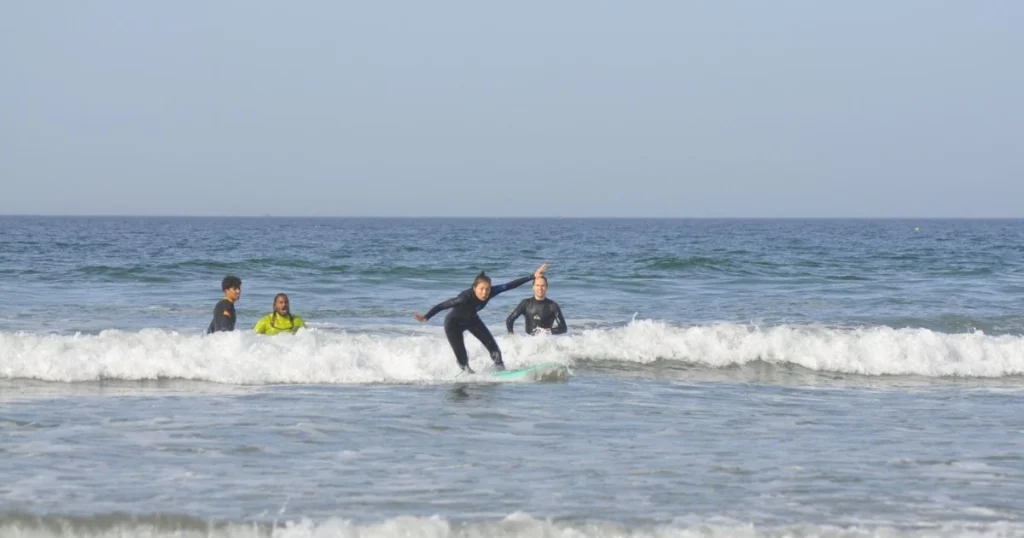
For surfing, summer brings the smallest waves of the year, which is precisely what makes it the easiest time to learn.
Autumn (September–November)
The quiet favourite. The interior heat breaks in September, the desert reopens properly in October, and the first Atlantic groundswells of the season arrive while the water is still at its warmest, around 20–22°C.
October in particular is hard to beat: warm sea, returning swell, comfortable cities, functional desert, and none of the crowds. If someone asked for one month with no other information, this is a strong candidate.
Winter (December–February)
Dry, bright and quiet across the south, cold at night everywhere, and the best surf season of the year. The Sahara is at its best. Marrakech is walkable rather than punishing. The Atlantic coast is the only part of Morocco where winter isn’t a trade-off at all.
It’s also the cheapest window outside the holiday weeks.
→ For the full picture — regional temperatures, what to pack, and month-by-month detail — read our guide to [visiting Morocco in winter].
Best time to visit Morocco month by month
| Month | Weather | Crowds | Surf | Verdict |
|---|---|---|---|---|
| January | Cold nights, bright days | Very low | Excellent | Best value, best waves |
| February | Warming slightly | Low, spike at half-term | Excellent | Strong all-round |
| March | Mild and green | Low to moderate | Very good | Underrated |
| April | Warm, comfortable | High at Easter | Good | Best month overall |
| May | Warm, dry | Moderate | Moderate | Excellent for touring |
| June | Hot inland | Moderate | Small | Coast only |
| July | Very hot inland | Very high on coast | Small | Coast only |
| August | Very hot inland | Very high on coast | Small | Coast only |
| September | Heat breaking | Moderate | Building | Excellent |
| October | Warm, dry | Low to moderate | Very good | Best all-round month |
| November | Cooling, wet in north | Low | Very good | Best value shoulder |
| December | Mild days, cold nights | Spike from ~20th | Excellent | Good before Christmas |
January and February
The cheapest and quietest months, and the peak of the surf season. Nights are cold inland and the Atlas holds snow. Come for waves, desert stars and empty monuments, not for warm evenings.
March, April and May
The classic window. Everything is open, everything is green, and the temperature works in every region simultaneously. April is the single best month for a first trip covering Marrakech, the desert and the coast. Book around Easter, not through it.
June, July and August
Stay on the Atlantic. Agadir, Taghazout, Tamraght and Essaouira remain comfortable while the interior bakes. Beginner surf conditions are at their best and the sea is at its warmest. Expect peak-season pricing on the coast and book early.
September, October and November
The connoisseur’s choice. Warm water, returning swell, no crowds, and the desert coming back into season. November is the best-value month of the entire year outside mid-January.
December
Mild, bright and building towards the winter swell. The first three weeks are excellent and quiet. From around the 20th, Marrakech and Agadir fill up and prices climb sharply through New Year.
Best time to visit Morocco for surfing
Season: September through April, peaking November to February.
North Atlantic groundswells reach the Moroccan coast from autumn onwards, wrapping around a chain of rocky headlands into long right-hand point breaks. Water sits at 17–19°C in winter and 20–22°C in late summer, so a 3/2 wetsuit covers the cold months and a shorty is enough by May.
The short version by level:
- Learning? May to October. Smaller, cleaner, warmer.
- Improving? September–October and March–April. Enough swell to matter, not enough to intimidate.
- Experienced? November to February. This is when the points switch on.
Taghazout
Peaks between November and February. Anchor Point needs a solid winter swell to link its sections, so the biggest months are the ones worth planning around. Busy in the water during that window.
Tamraght
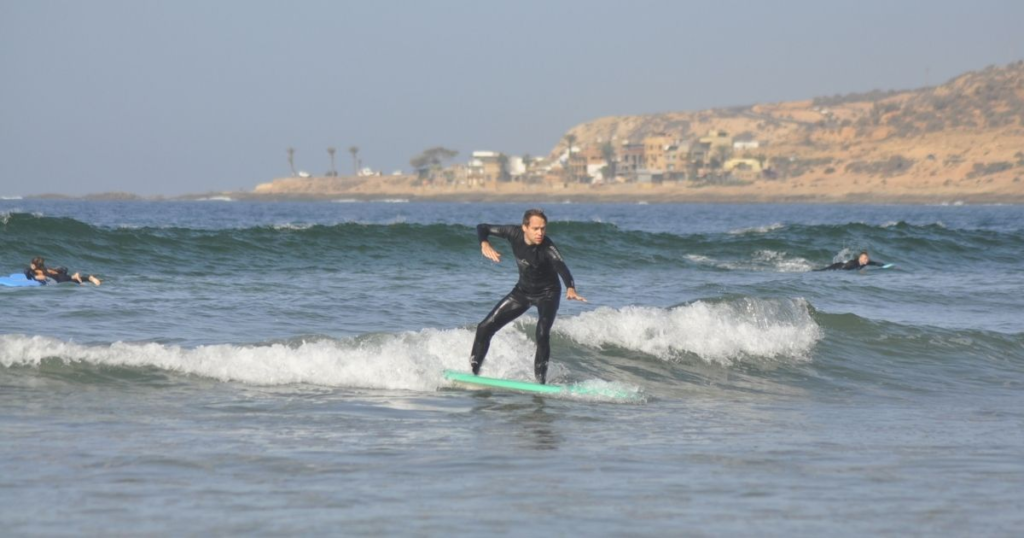
Works year-round. Banana Beach holds up when the points are too big or too crowded, which makes it the most reliable place to learn in any season, and the safest base if you’re travelling in the depths of winter without much experience.
Imsouane
Best from October to March. The bay needs a decent northwest swell to link across its full length, and that’s a winter pattern.
→ For spot-by-spot detail, what a week actually looks like, and how to choose between the three villages, read our [surf camp Morocco guide].
Best time to visit Morocco by destination
Agadir and the Atlantic coast
Best: September to November, and March to May. Also good: everything else. This is the most weather-proof region in the country.
Agadir averages around 300 days of sun and stays between 20°C and 28°C year-round. Winter brings the best waves, summer brings the warmest water and the biggest crowds, and the shoulder seasons deliver both warmth and quiet. There is no bad month here, only different ones.
Marrakech and the Sahara
Best: March to May, and October to November. Avoid: July and August.
Both work on the same calendar. Spring and autumn give you comfortable city days and a desert that’s pleasant at midday and bearable at night. Winter is excellent for the Sahara if you can handle near-freezing nights under canvas, and Marrakech in January is cold after dark but beautifully quiet. Midsummer is the one genuine no.
Best time to visit Morocco: FAQs
What is the best time to visit Morocco? April to May and September to October. These months give you warm but not extreme temperatures across every region, minimal rain, accessible mountains and desert, and moderate crowds. April is the strongest single month for a first trip; October is the strongest for combining good weather with warm sea and returning surf.
What is the best time to visit Morocco for surfing? September through April, peaking November to February when North Atlantic swells are most consistent. Beginners are better served between May and October, when waves are smaller and the water is warmest. A 3/2 wetsuit covers the winter months.
Is winter a good time to visit Morocco? Yes, particularly for the Sahara and the Atlantic coast. Winter brings dry sunny days, the year’s best surf, low prices and few tourists. The trade-offs are cold nights, unheated riads and rain in the north.
What is the cheapest time to visit Morocco? Mid-January to February, followed by November. Flights and accommodation drop sharply after New Year and stay low until the Easter build-up. January combines the lowest prices of the year with the best surf conditions, which is an unusual pairing.
Planning your trip?
If your answer to “what did you come for” is waves, the calendar simplifies fast. The swell runs from September to April and the coast is warm the whole time.
[Book Now] — check dates and availability. [View Packages] — compare weeks, levels and accommodation.