Can You Surf in Morocco?
Short answer: yes and better than most people expect. Morocco sits on the edge of the Atlantic with more than 3,000 km of coastline catching swell straight from the North Atlantic, which means surfable waves almost every day of the year. This guide covers where to surf in Morocco, when to go, what it costs, and whether it works if you have never stood on a board before.
Yes, You Can Surf in Morocco : the Short Answer
You can surf in Morocco all year round. The Atlantic coast between Agadir and Essaouira is the country’s main surf region, home to world-class right-hand point breaks and gentle sandy beach breaks within a few kilometres of each other. Winter brings the biggest, most consistent swell; summer brings smaller, cleaner waves that suit beginners.
Why Morocco Is Such a Good Place to Surf
Consistent Atlantic swell most of the year
Low-pressure systems in the North Atlantic push groundswell south towards the Moroccan coast from roughly September to April. The coastline faces west and north-west, so it picks up that energy directly. Even in the flatter summer months, smaller swells keep the beach breaks working which is exactly what a learner wants.
Warm weather, mild water, and space in the line-up
The southern coast gets close to 300 days of sunshine a year. Air temperatures sit around 18–22 °C in winter and 25–30 °C in summer, and the water rarely drops below 17 °C. A 3/2 mm wetsuit covers you for most of the year. Outside the December–February peak, the line-ups stay far less crowded than anywhere comparable in Europe.
Cheaper than Portugal, Spain, or Bali
This is the part that surprises people. A week-long all-inclusive surf camp in Morocco typically runs between €450 and €800, and budget options start lower. A group lesson at a proper local surf school costs around 250–400 MAD (roughly €25–40). Flights from most European cities to Agadir are short and cheap, and there is no jet lag.
Where to Surf in Morocco: 5 Best Spots
Taghazout : the surf capital of Morocco
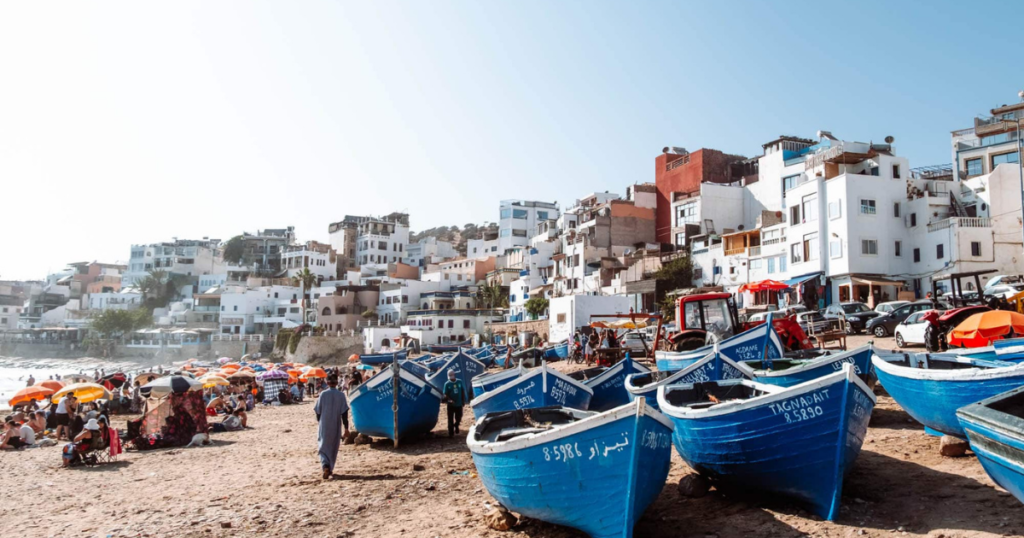
A former fishing village about 20 km north of Agadir, Taghazout is the centre of Moroccan surf culture. Anchor Point is the famous one: a long, fast right-hand point break that peels for hundreds of metres when a big north-west swell lands. Killer Point, Boilers, La Source, and Panoramas are all within a short drive. Most of these are intermediate-to-advanced waves breaking over rock or reef.
Tamraght : beginner-friendly beach breaks
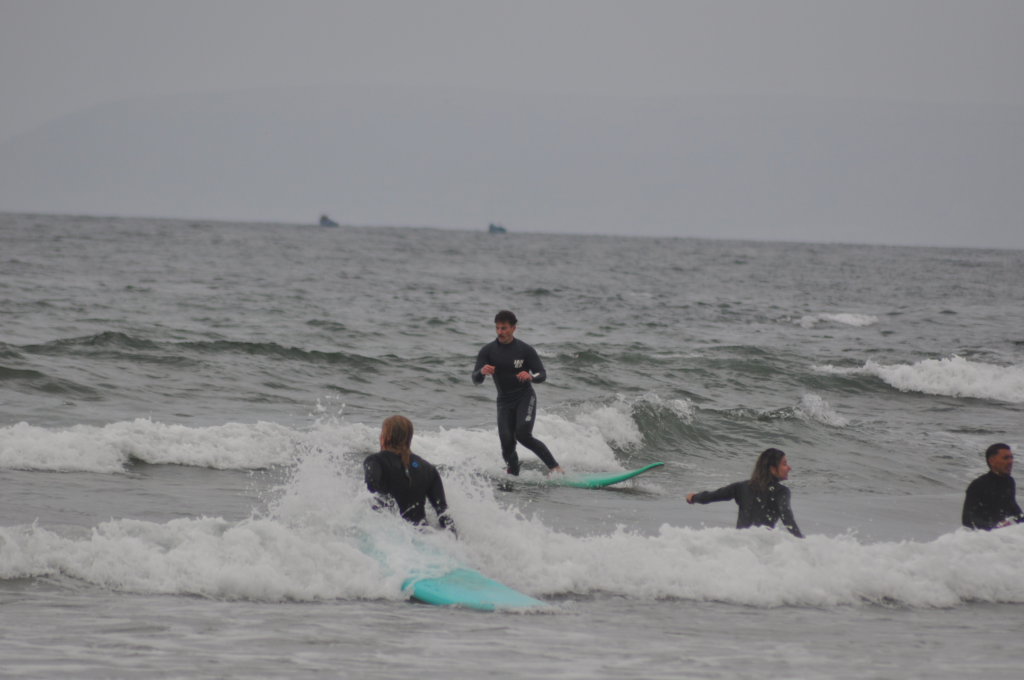
Ten minutes south of Taghazout, Tamraght is quieter and sits right next to the gentlest waves in the region. Banana Beach, Devil’s Rock, and Croco Beach are sandy-bottomed, forgiving, and where almost every surf school in the area runs its lessons. If you are learning, this is where you want to be based.
Imsouane : one of the longest right-handers in Africa
About 80 km north of Taghazout, Imsouane’s bay produces a slow, mellow right-hander that can carry you for several hundred metres on a good day. It is one of the most beginner- and longboard-friendly point breaks anywhere on the continent. The nearby Cathedral Point is a punchier option for stronger surfers.
Agadir and Mirleft : quieter alternatives
Agadir’s long sheltered bay stays calm when everything else is oversized, which makes it a useful backup on huge swells. Further south, Mirleft offers cliffs, empty beaches, and a slower pace for anyone who wants to surf without the surf-town scene.
When Is the Best Time to Surf in Morocco?
September to April the main swell season
This is the classic season. Groundswells arrive regularly, the point breaks switch on, and waves in the chest-to-overhead range are normal. December through February is the peak the most powerful and most crowded period, and best suited to confident intermediates and above.
May to August the best time for beginners
Summer swells are smaller and less frequent, which sounds like a downside but is actually ideal if you are learning. Waist-high, clean, warm-water waves are exactly the right conditions to build confidence. The water reaches 21–22 °C and a shorty wetsuit is often enough.
| Months | Typical waves | Water temp | Wetsuit | Best for |
|---|---|---|---|---|
| Dec – Feb | Big, powerful | 17–18 °C | 3/2 mm | Intermediate & advanced |
| Mar – Apr | Solid, less crowded | 17–18 °C | 3/2 mm | All levels |
| May – Jun | Small to medium | 19–20 °C | 3/2 mm or shorty | Beginners |
| Jul – Aug | Small, clean | 21–22 °C | Shorty | Beginners & families |
| Sep – Nov | Building, consistent | 20–22 °C | 3/2 mm | All levels |
Can Beginners Surf in Morocco?
Yes Morocco is one of the easiest places in the world to learn. The reason is variety: within a 20-minute drive you have everything from mellow sand-bottom beach breaks to serious reef, so a good instructor simply picks the beach that matches the day’s conditions and your level. Lessons are affordable, boards and wetsuits are included almost everywhere, and English is widely spoken in the surf towns.
If you have never surfed before, base yourself in Tamraght or Taghazout, book a surf camp or a package of lessons rather than one-offs, and give yourself at least five days. That is usually enough to be riding unbroken waves by the end of the week.
What to Know Before You Go
Wetsuit thickness by season
A 3/2 mm full suit works from roughly October to May. In July and August a shorty or even boardshorts is fine for most people. Booties are worth having if you plan to surf the rocky points like Boilers or Killer Point.
Renting a board vs bringing your own
Rentals are everywhere and cheap, usually a few euros a day, and every camp includes boards in its package. Unless you are advanced and attached to a specific board, renting saves you the airline surcharge and the hassle. Beginners should be on a soft-top or a large foam board anyway.
Safety, rips, and surf etiquette
The main hazards are rip currents, shallow rock at the points, and sea urchins. Surf with a guide or a school until you know the breaks. Anchor Point and the better-known spots get crowded in winter respect priority, do not drop in, and be friendly with local surfers. Morocco is generally a safe and welcoming destination, including for solo and female travellers, but dress modestly away from the beach.
FAQs About Surfing in Morocco
Is Morocco good for beginner surfers?
Very. The sandy beach breaks around Tamraght and the long mellow wave at Imsouane are among the most forgiving waves you will find, and lesson prices are low compared to Europe.
Can you surf in Morocco in summer?
Yes. Summer waves are smaller than winter’s, but the coast still gets regular swell. Warm water and gentle conditions make June to August the best window for a first surf trip.
Do you need a wetsuit to surf in Morocco?
For most of the year, yes a 3/2 mm suit. In midsummer the water reaches around 22 °C and a shorty is usually enough.
How much does a surf trip to Morocco cost?
Budget roughly €450–800 for a week-long all-inclusive surf camp including accommodation, meals, coaching, and equipment. Standalone group lessons cost about €25–40 each. Flights and food are inexpensive, so Morocco works out cheaper than most European surf destinations.
Ready to Surf in Morocco?
So can you surf in Morocco? Absolutely. Year-round waves, warm sun, world-class point breaks, and beginner beaches within minutes of each other make it one of the best value surf destinations anywhere.
If you want the waves without the logistics, our surf camps handle accommodation, transport, boards, and daily coaching, and we move you to whichever break is working best that morning.
View our surf packages → or get in touch and we’ll help you pick the right week →